
Exploring Technology in Civil Construction
Aaron Toppston
March 28, 2025
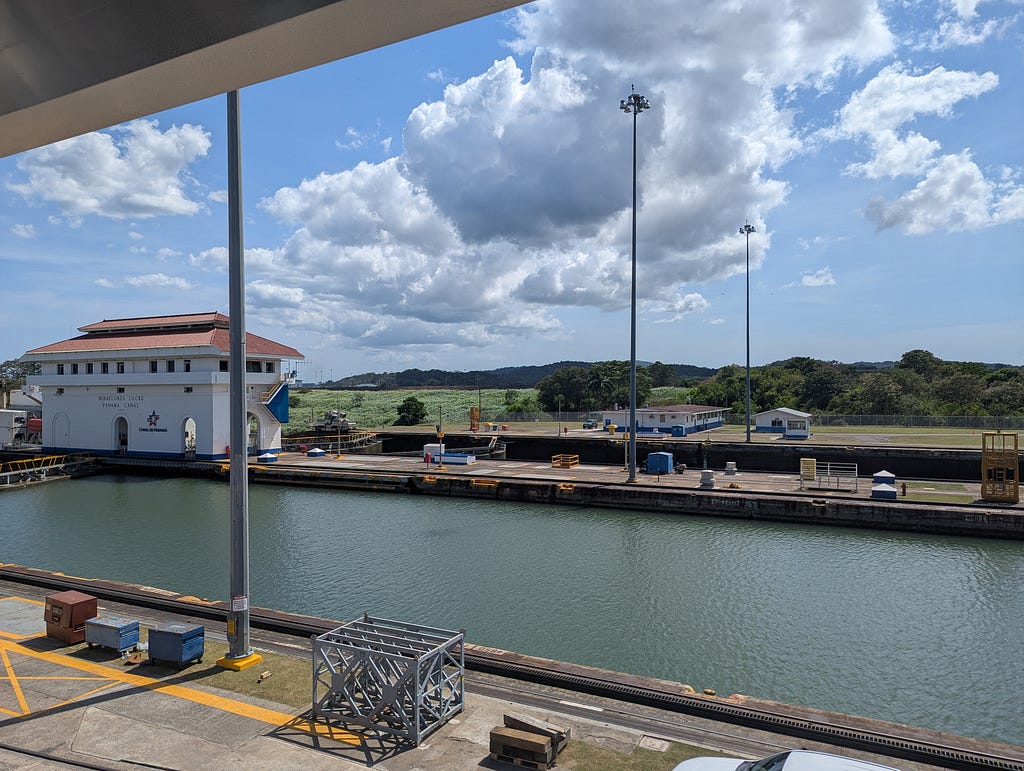
At GS Futures, an early stage venture fund for built environment technology, we are fortunate to meet hundreds of founders each year. These founders are building a wide variety of products — from AI agents to IoT devices. Most founders initially target the commercial construction industry. This market focus is partially because well-known commercial builders tend to use a more diversified technology stack. However, the market focus is also due to familiarity — it is easier to relate to how we build homes, offices, and apartments, particularly for founders and early employees that do not have direct construction industry experience.
On the other side of the coin is civil or "horizontal" construction which includes the roads, bridges, potable water, and other infrastructure we rely on every day. Civil construction is a sizable portion of total construction value; it totals $308 billion or 25% of U.S. non-residential construction.
In this article, we use highway construction examples for the sake of simplicity to illustrate differences between civil and commercial construction. The goal of this article is to introduce readers to civil construction vs. providing nuanced differences between the types of civil assets.
Funding and Governance Structure
In the U.S., many civil assets are funded by public entities and built by private entities. Highway and transit capital expenditure projects are usually funded 80% Federal, 20% local. A significant portion of this funding flows via formula — USDOT follows specific rules on distribution of funds to state DOTs based on population and other factors.
Procurement Structure
The design of civil assets are, as a rule, less differentiated vs commercial buildings. This is because civil design tends to be more standardized than a building as civil projects must adhere to uniform engineering standards, safety regulations and specifications set by government-related organizations (e.g. AASHTO guidelines). This dynamic has allowed the Design-Bid-Build (DBB) project delivery method to rise in prominence.
Contractor Stakeholders
The design consistency reinforced by regulatory codes and industry standards also means that all industry stakeholders have common expectations as to how a civil project must be completed. This consistency fosters a community of practice where informal knowledge, widely accepted techniques, and local expertise contribute to industry hyper-localization and trade specialization.
Design Process
Linear civil assets, such as roads, bridges and highways, are typically designed based on roadway capacity (i.e. number of axles per day). This expected future utilization is informed by traffic studies, economic forecasts, regional roadway planning and other inputs.
In general, the timeline to complete a roadway design is far longer than the timeline to complete building design. This is due to the number of stakeholders requiring iterations and approvals from entities such as DOT officials, other government agencies, environmental authorities, community stakeholders and others.
Contracting and Risk Transfer
In recent times, conversation has increased on the value of moving away from DBB project delivery and towards Construction Manager/General Contractor (CM/GC) delivery for civil assets. CM/GC construction is common practice for U.S. commercial construction, but less common in civil construction. However, as of 2025, most civil projects are still procured through DBB.
Low Price Competition & Process-Driven Construction
One of the most important points of comparison between commercial and civil construction is "what wins a bid?" Commercial construction is often won on relationship. Civil construction is won on price. Even in procurement structures which score technical submissions, 9 times out of 10, the bidder with the lowest price wins the civil infrastructure request for proposal (RFP).
Technology Comparison
In general, commercial construction has adopted modern software to improve collaboration, communication and project management more rapidly compared to civil construction. Civil construction is a low price competition — contractors do not benefit from including the costs of an out-of-specification technology on a project unless financial returns are well proven.
Post 2020, software adoption increased as COVID necessitated progress reviews without physical site access. The dynamic has created an increase in administrative burden for managing public works. It is an area where modern software such as Clearstory and SmartPM (as well as the crafty application of general LLMs) have begun to make an impact.
Final Thoughts on Venture-Backed Technology in Civil Construction
We have seen impressive applications of technology in civil infrastructure. These range from earthwork quantification based on drone images to autonomous excavation equipment. Going forward, we believe civil construction will continue to see an outsized emphasis on field innovation — how technology can improve production rates.
We are optimistic about the potential impact of software adoption in civil construction and look forward to partnering with founders serving civil construction. Please reach out to discuss more any time.
Let’s Build Together
We back ambitious founders with capital and strategic support, providing access to GS Group to accelerate scale.
Continue Reading